
Swiss Wool Library
Building on the experience of the Alpine Wool Library and the AlpTextyles pilot project, the Swiss Wool Library aims to create a practical, research-based resource for the meaningful use of Swiss wool.
A Research-Based Approach to Swiss Wool
A core objective of the Swiss Wool Library is to strengthen connections between craft and industry. This involves addressing real technical and economic conditions for production in Switzerland, including the potential need to blend Swiss wool with other natural fibres, such as silk or merino, to meet performance and market requirements.
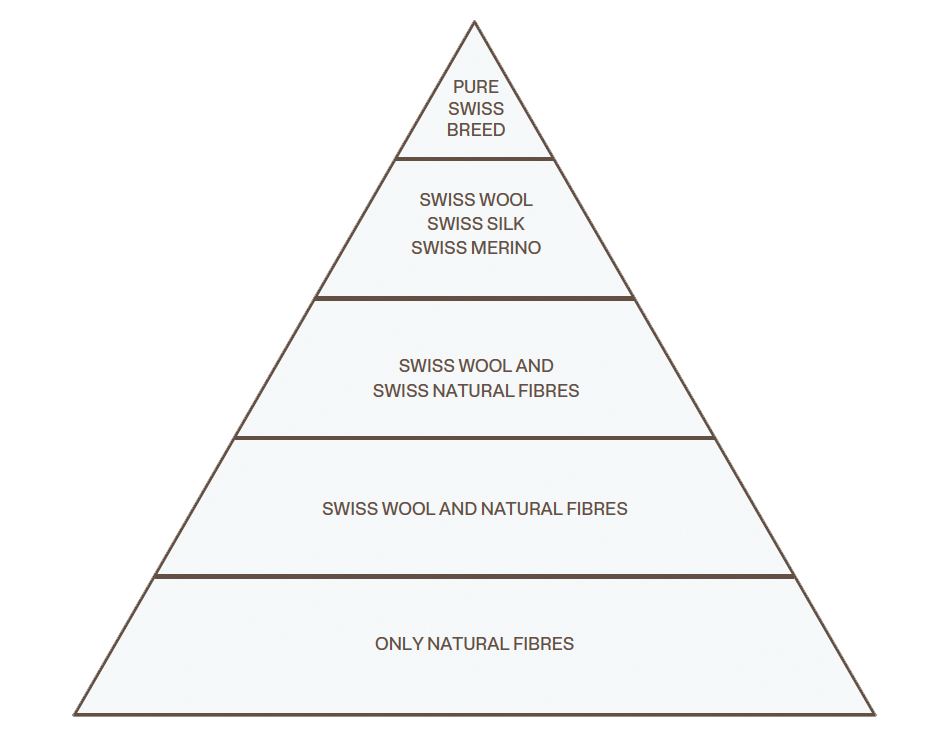
To guide this approach, the project introduces a “fibre pyramid” that prioritises the widest possible and most responsible use of natural fibres linked to Switzerland.
This model reflects a pragmatic strategy: Swiss wool is used where it is technically, economically, and ecologically meaningful.
Criterias and material data
While the project was initially conceived as a comprehensive documentation of all Swiss sheep breeds, the research process revealed structural limitations to a strictly breed-based approach. Around 80% of sheep in Switzerland are unregistered crossbreeds or mixed breeds, and most Swiss wools share similar characteristics: predominantly alpine, relatively coarse, and generally unsuitable for applications in direct contact with the skin.
Rather than treating these qualities as limitations, the Swiss Wool Library reframes them as functional assets, shifting the focus from breed classification to use, technique, and application.
It aims to be a tool that facilitates industrial use, taking into account application-specific criteria such as, for example, in architecture: humidity resistance, insulation performance, and material flammability.
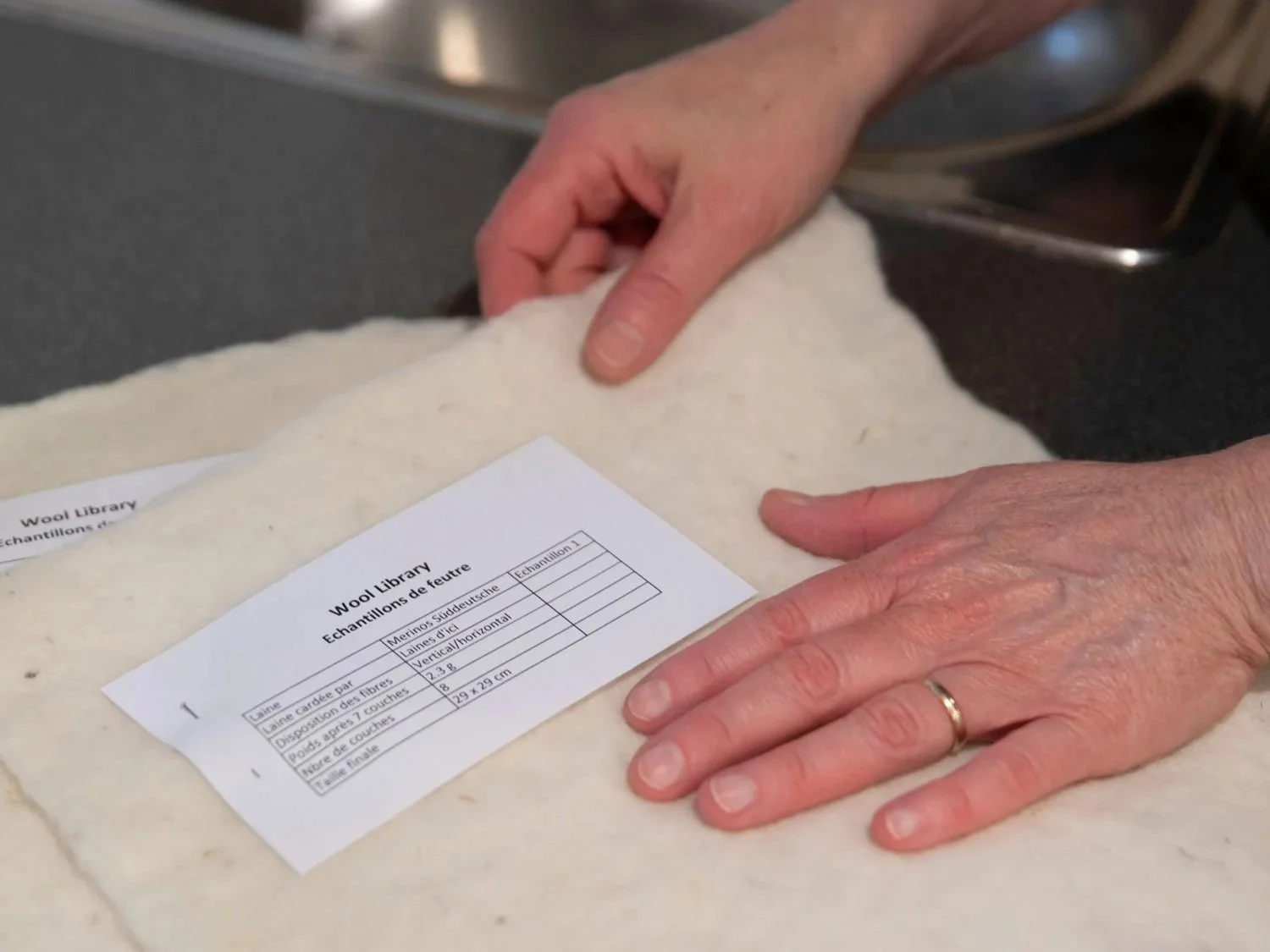
Conceived as a long-term platform for research, education, and innovation, the Swiss Wool Library combines scientific analysis with physical textile samples to support designers, architects, brands, students, and manufacturers.
By reducing waste, supporting fair income for farmers, and expanding knowledge around Swiss fibres, the project contributes to a more resilient and sustainable textile ecosystem in Switzerland.

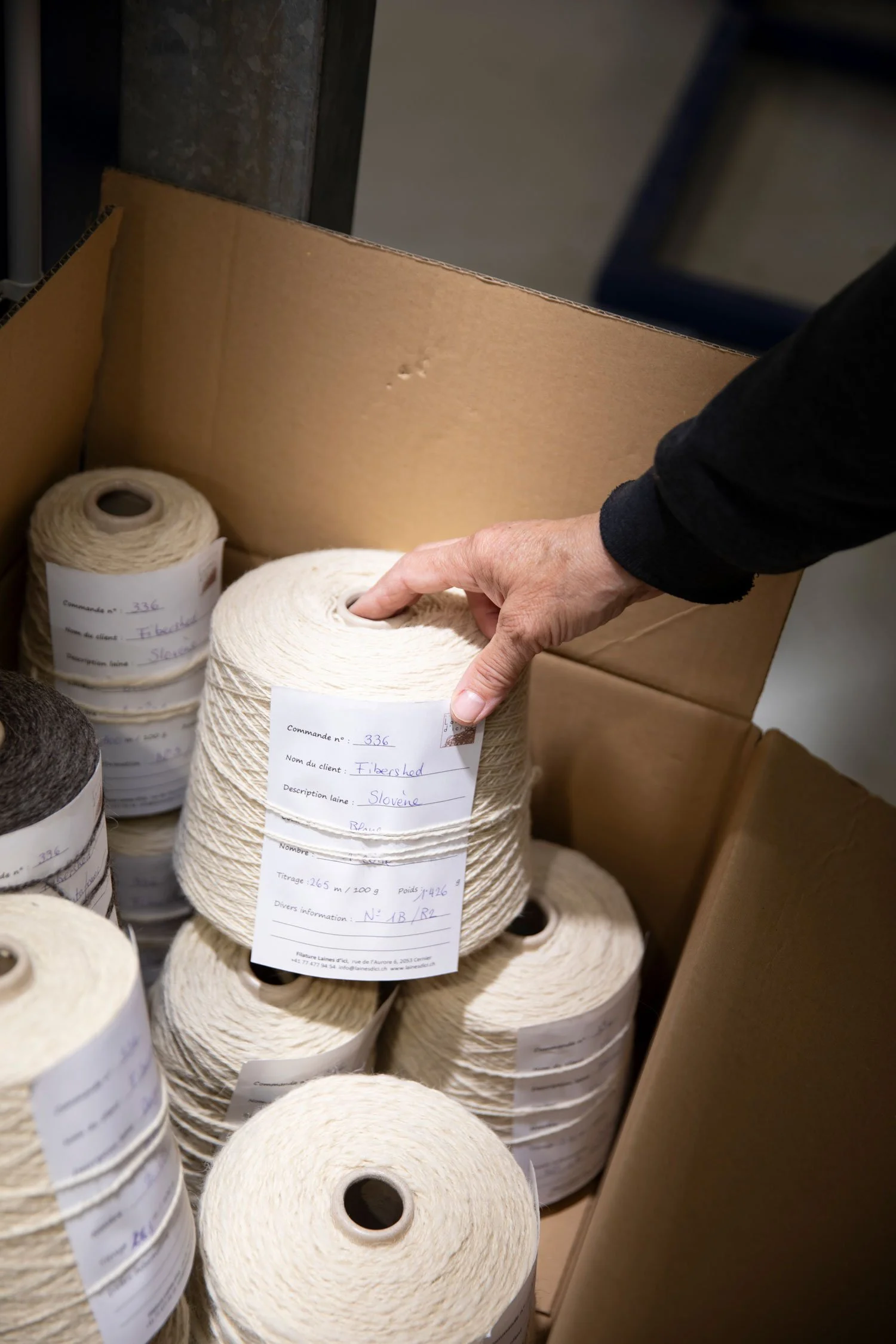
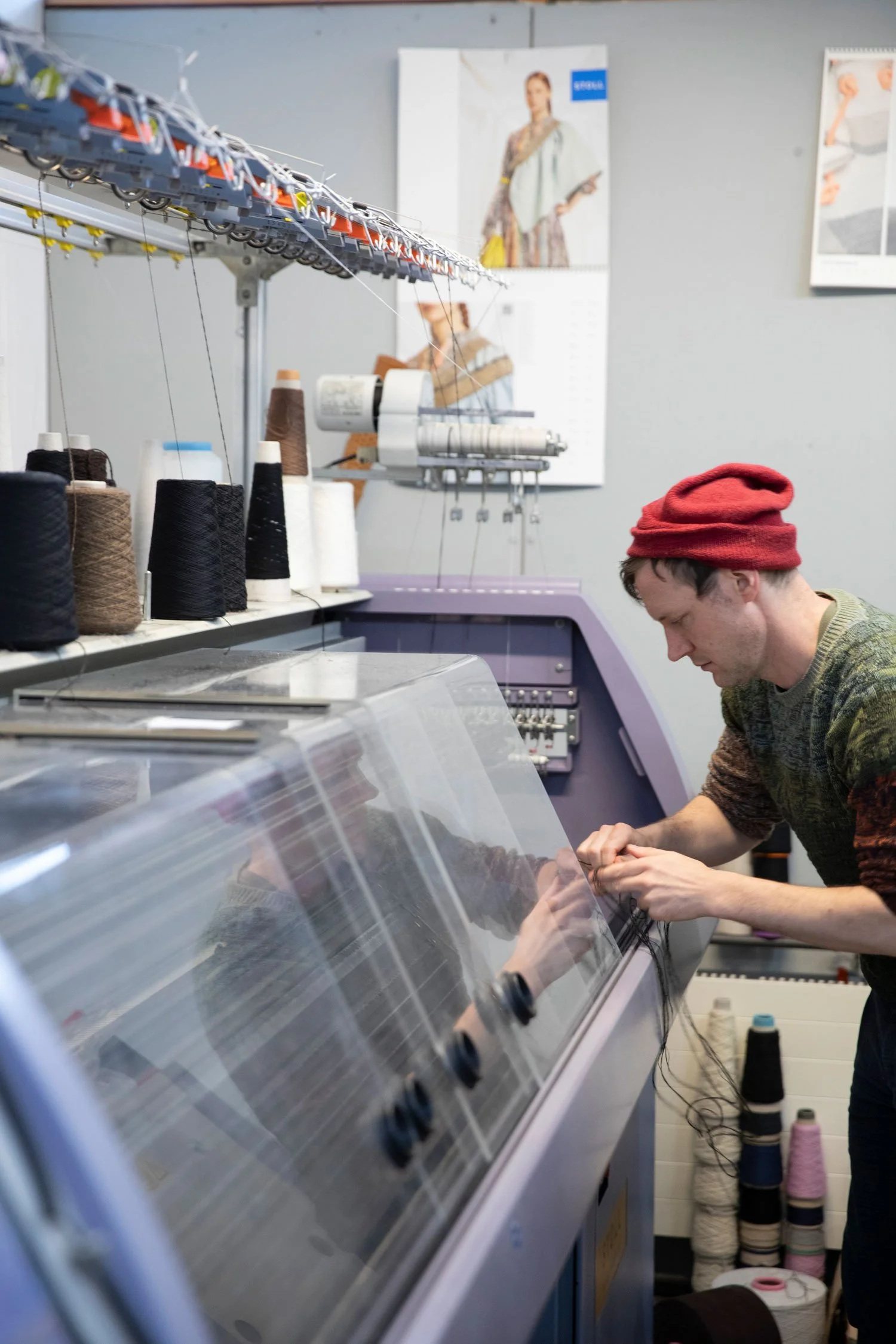
This project wouldn’t have been possible without our dedicated partners.
Our heartfelt THANK YOU to:
Tina Moor and Brigitt Egloff at SpinnLab HSLU for the research and spinning tests
Woolshed / Onl’fait for their financial support